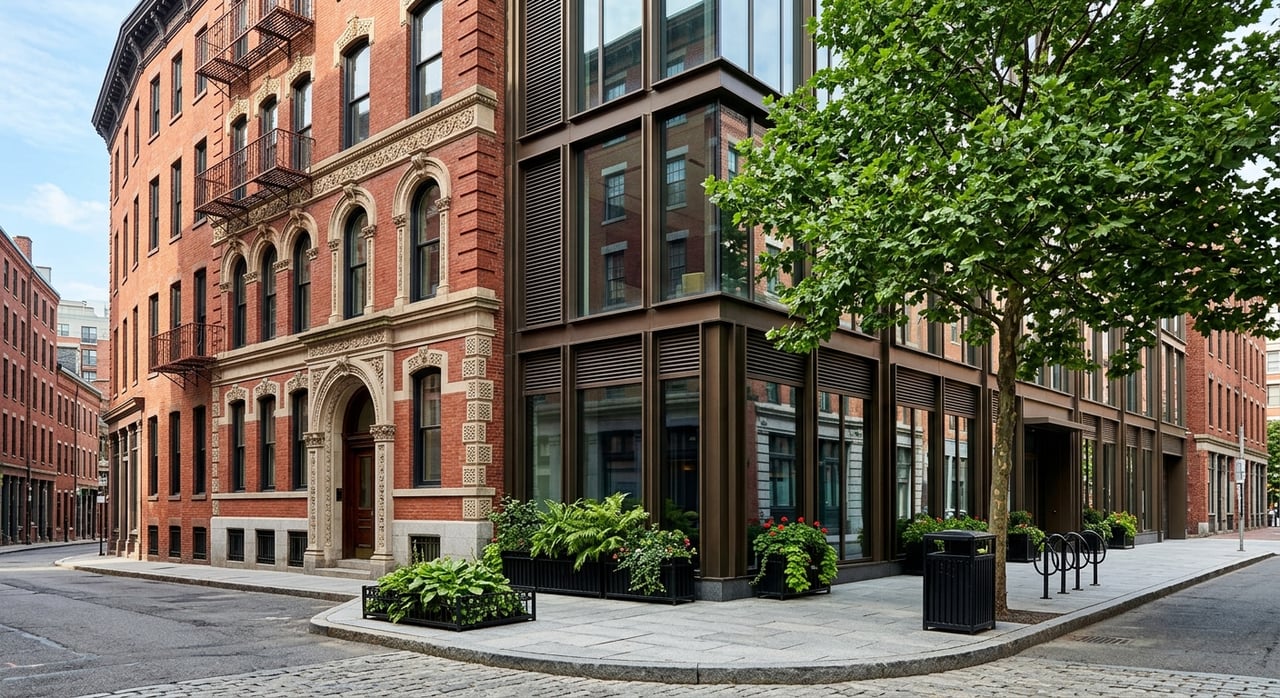
Trying to choose between the Financial District and Battery Park City? If you want downtown convenience but are not sure which neighborhood better fits your lifestyle, you are not alone. These two Lower Manhattan areas sit close together, yet they offer very different day-to-day experiences, price points, and housing options. This guide breaks down the key differences so you can compare them with more confidence. Let’s dive in.
Financial District vs. Battery Park City
At a glance, the Financial District and Battery Park City both offer downtown living, strong transit access, and proximity to the waterfront. But the feel of each neighborhood is distinct.
The Financial District, often called FiDi, is more transit-dense and more shaped by office-to-residential conversions. Battery Park City is a planned waterfront community with a strong park focus and a more residential layout. If you are deciding where to buy or rent, that difference can shape everything from your commute to your budget to how your block feels on a typical day.
Housing stock feels different
FiDi has more conversion-driven inventory
The Financial District’s residential market has grown through large multifamily projects and office-to-residential conversions. According to the NYU Furman Center profile cited in the research, 4,596 housing units were added from 2010 to 2024, with 91% market-rate and 8% income-targeted.
That growth has helped reshape FiDi into a more active residential area. The New York City Comptroller also notes that Lower Manhattan’s current conversion pipeline is heavily rental-oriented and skewed toward studios and smaller one-bedroom apartments. For renters and buyers who want newer adaptive-reuse buildings or smaller layouts, FiDi may offer more relevant options.
Battery Park City is more purpose-built
Battery Park City has a different housing story. The Battery Park City Authority describes it as a fully developed residential and commercial site with about 8,300 residential units.
That planned structure creates a more consistent neighborhood feel. The research also notes preserved long-term rental affordability at Gateway Plaza and Tribeca Pointe, along with limits on some condo reset increases. In practical terms, Battery Park City may appeal to you if you prefer a neighborhood that was built as a residential community rather than adapted into one over time.
Price differences matter
FiDi is the lower-cost option
As of April 2026, Realtor.com neighborhood data in the research report shows FiDi with a median asking price of $1.155 million and a median asking rent of $4,445 per month.
That makes FiDi the more budget-friendly option of the two based on current asking data. If you want downtown Manhattan access with a somewhat lower entry point, FiDi may deserve a closer look.
Battery Park City comes at a premium
The same April 2026 data shows Battery Park City with a median asking price of $1.35 million and a median asking rent of $5,232 per month.
That is about $195,000 higher on asking price and about 18% higher on rent than FiDi. For some buyers and renters, that premium may be worth it for the planned setting, waterfront orientation, and continuous park access. For others, FiDi’s lower median pricing may offer better flexibility.
Commuting is one of the biggest differences
FiDi offers denser transit access
If your routine depends on fast, direct transit connections, the Financial District stands out. The World Trade Center Oculus includes 12 subway lines and the PATH station, while Fulton Center integrates five subway stations serving nine lines. FiDi also has NYC Ferry service at Wall Street/Pier 11 on the East River route.
That combination gives FiDi one of the strongest transit profiles in downtown Manhattan. If you commute to different parts of the city or need multiple backup routes, that kind of network can be a major advantage.
Battery Park City is connected from the edges
Battery Park City is also well served, but its access is more perimeter-based. The Battery Park City Authority lists nearby subway access through stations such as Chambers Street, Wall Street, Bowling Green, Whitehall/South Ferry, Broad Street, Rector Street, and PATH at World Trade Center.
The area also has M9, M20, and M22 buses, the Downtown Connection shuttle, Citi Bike stations, and ferry access at Battery Park City/Vesey Street. BPCA also notes direct New Jersey Waterway ferry service to the World Financial Center ferry stop near Rockefeller Park. If your travel patterns include New Jersey, that can be especially practical.
Outdoor space shapes daily life
Battery Park City is built around parks
For many people, this is the deciding factor. Battery Park City includes about 36 acres of parks and public space within its 92-acre site, according to BPCA.
Its public spaces include Rockefeller Park, North Cove, Rector Park, and the esplanade. BPCA also reports more than 1,000 free programs and events in Fiscal 2024. That means access to open space is not just nearby, it is woven into the neighborhood itself.
FiDi has major open-space destinations
FiDi’s outdoor and public-space experience is different. Rather than one continuous park system, it is anchored by key destinations.
The World Trade Center campus includes the Oculus, Liberty Park, shopping, dining, events, and public open space. Just south of FiDi, The Battery offers 25 acres of waterfront parkland with gardens, bike paths, lawns, an urban farm, and the SeaGlass Carousel. If you like having standout destinations nearby, FiDi still offers meaningful access to recreation and public space.
Lifestyle fit: which neighborhood suits you?
Choose FiDi if you want access and flexibility
The Financial District may be a better fit if your top priorities include:
- Dense subway and PATH access
- More conversion-driven inventory
- Smaller apartment layouts in newer adaptive-reuse buildings
- A lower current asking budget than Battery Park City
- Fast connections to multiple parts of Manhattan and beyond
FiDi can work well for buyers and renters who want downtown energy with strong transportation options. It may also appeal to people who value convenience first and are comfortable with a neighborhood shaped by mixed-use buildings and ongoing residential growth.
Choose Battery Park City if you want a park-centered setting
Battery Park City may be the better fit if you care most about:
- Waterfront frontage
- Continuous park access
- A planned residential environment
- A more internally cohesive neighborhood layout
- Easy access to ferries and open space
If your ideal downtown experience includes regular walks along the water, nearby green space, and a more residential feel, Battery Park City offers a strong case. You may pay more, but the built environment is a big part of what you are paying for.
A quick side-by-side view
| Factor | Financial District | Battery Park City |
|---|---|---|
| Housing pattern | Conversion-heavy and expanding | Purpose-built and fully developed |
| Median asking price | $1.155M | $1.35M |
| Median asking rent | $4,445 | $5,232 |
| Transit profile | Very dense subway, PATH, ferry access | Strong access, more perimeter-based |
| Parks and open space | Major destinations nearby | Continuous neighborhood park system |
| Best for | Transit-focused buyers and renters | Park- and waterfront-focused buyers and renters |
How to make the right call
The best neighborhood is the one that supports your real daily routine. A lower asking price does not always mean better value if you care most about open space. In the same way, more park access may not outweigh a longer or less direct commute.
When you compare FiDi and Battery Park City, focus on the details that affect your week the most. Think about your commute, your preferred housing type, how often you use parks and waterfront space, and what budget range feels comfortable. Those factors usually make the decision much clearer.
If you are weighing downtown options, a neighborhood-by-neighborhood strategy can save you time and help you avoid choosing based on broad assumptions. The right fit often becomes obvious once you compare inventory, price signals, and lifestyle tradeoffs side by side.
Whether you are buying, selling, or renting in Lower Manhattan, Miller Schackman can help you compare neighborhoods, evaluate current market conditions, and move forward with a plan that fits your goals.
FAQs
What is the main difference between Financial District and Battery Park City?
- The Financial District is more transit-dense and conversion-heavy, while Battery Park City is a planned waterfront neighborhood with continuous parks and a more residential layout.
Is Battery Park City more expensive than the Financial District?
- Yes. April 2026 asking data in the research report shows Battery Park City above FiDi on both median asking price and median rent.
Is the Financial District better for commuting in Lower Manhattan?
- For many people, yes. FiDi has especially dense access to subway lines, PATH, and ferry service through the World Trade Center, Fulton Center, and Wall Street/Pier 11.
Does Battery Park City have more green space than FiDi?
- Yes. Battery Park City includes about 36 acres of parks and public space within its planned site, while FiDi’s open space is more centered around major destinations such as the World Trade Center campus and The Battery.
Which downtown neighborhood is better for renters: FiDi or Battery Park City?
- It depends on your priorities. FiDi may suit renters who want lower asking rents and stronger transit density, while Battery Park City may suit renters who want more waterfront access and a park-centered environment.