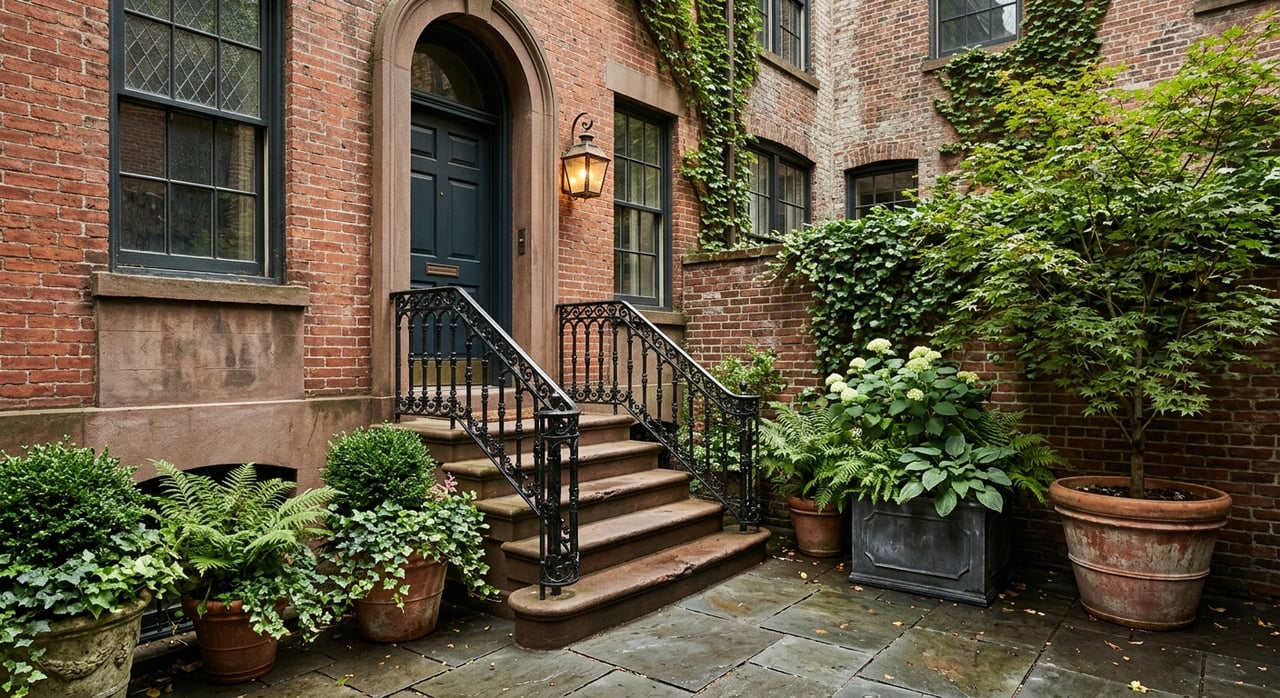
What makes one West Village block feel instantly different from the next? In a neighborhood known for its charm, the hidden courtyards and mews stand out because they offer something even rarer: a sense of seclusion inside one of Manhattan’s most connected residential markets. If you are curious about why these tucked-away lanes matter, or what they can mean for buyers and sellers, this guide will walk you through the history, the most notable examples, and the market story behind them. Let’s dive in.
Why West Village streets feel different
The West Village stands apart because its streets do not follow Manhattan’s usual grid. That irregular layout, combined with historic townhouses and walk-up buildings, creates a more intimate street pattern than many other parts of the city. At the same time, the neighborhood remains highly connected, with current data showing a Walk Score of 100, a Transit Score of 100, and a Bike Score of 95.
That mix is part of the appeal. You can be on a quiet, tucked-away lane and still have easy access to the rest of Manhattan. For many buyers, that balance of privacy and convenience is hard to find elsewhere.
What a mews means here
A mews traditionally refers to a former stable row or service lane that was later converted into housing. In the West Village and nearby Greenwich Village, that history still shows up in narrow passages, carriage-era buildings, and small private courts.
These places are not hidden by accident. Many began as practical service spaces behind larger homes, then evolved into residential enclaves with a distinct look and feel. Today, that layered history adds character that newer developments cannot easily replicate.
How preservation helps protect them
Historic preservation plays a major role in why these places still feel so intact. According to the New York City Landmarks Preservation Commission, historic districts are recognized for having a distinct sense of place, and most exterior changes on designated properties require approval.
That matters in the West Village because the neighborhood’s low-rise scale, gates, courtyards, and historic street walls are part of what makes these micro-locations special. Preservation does not freeze a property in time, but it does help maintain the physical details that give these lanes their identity.
Hidden courtyards and mews to know
Some of the best-known hidden streets and courts tied to the West Village story are technically within or adjacent to Greenwich Village, but they help illustrate the same small-scale, preserved character that draws buyers to this part of downtown Manhattan.
Washington Mews
Washington Mews is one of the clearest examples of a service lane turned prized residential enclave. It is a private street lined with two-story buildings that include former 19th-century horse stables and later residences.
Its appeal comes from more than looks alone. It captures the kind of architectural history buyers often seek when they want something that feels distinct from a standard apartment building.
MacDougal Alley
MacDougal Alley began as a private court serving townhouses on Washington Square North and West 8th Street. Over time, many of its former stables were converted into artist studios, adding another layer to its story.
Today, it is often described as a hidden enclave. That reputation adds to its mystique and helps explain why these smaller historic pockets continue to stand out in the downtown market.
Patchin Place
Patchin Place is an iron-gated dead-end street dating to 1848. It is known for its seclusion and for literary associations that include e. e. cummings.
Its layout is a big part of its charm. Because it is enclosed and visually set apart from surrounding streets, it creates a stronger sense of retreat than you might expect in lower Manhattan.
Milligan Place
Milligan Place is a small courtyard reached through a narrow entrance from Sixth Avenue. The houses there date to 1852 and were also built for Aaron D. Patchin.
The feeling here is shaped by scale. The tucked-away entrance and compact arrangement of homes make it feel separate from the pace of the avenue just outside.
Grove Court
Grove Court is one of the area’s most photographed sites. Behind a private gate, it opens into a triangular courtyard lined with small houses that trace back to working-class origins.
That contrast is part of what makes it memorable. It feels quiet and enclosed, yet it sits within one of Manhattan’s most active and desirable residential neighborhoods.
Why these streets matter in the market
In the West Village, demand already starts from a premium baseline. Current StreetEasy data puts the neighborhood’s 2025 median asking price at $1.775 million, compared with a Manhattan median asking price of $1.35 million. StreetEasy also reports a median base rent of $5,495, which is well above the borough median.
Recent Redfin neighborhood data adds more context, showing a three-month median sale price of about $1.52 million and a sale-to-list ratio of 99.6%, with 3.1% of homes selling above list price. In short, buyers are already competing for limited inventory before any block-by-block appeal comes into play.
That is where hidden courtyards and mews can have an outsized effect. They add scarcity, visual distinction, and a feeling of privacy inside an already supply-constrained neighborhood. When a home combines West Village location with one of these rare micro-settings, interest can rise quickly.
What buyers should think about
If you are considering a home on or near one of these tucked-away streets, the appeal is easy to understand. Still, the right purchase depends on balancing character with practical due diligence.
Start with landmark status. If the building is designated, most exterior work will require review by the Landmarks Preservation Commission, while ordinary interior work usually falls outside that process.
You will also want to think carefully about which features create the value. Windows, façade materials, gates, lot depth, and other historic details may be central to a property’s charm, but they can also be harder to change than finishes inside the home.
For some buyers, that is a plus because it helps preserve the setting they fell in love with. For others, it means renovation goals should be considered early.
What sellers should keep in mind
If you own a property in one of these micro-locations, your marketing story should go beyond simple charm. Buyers respond to the combination of history, scarcity, and preserved context.
That means positioning matters. A home on a gated lane, former mews, or courtyard often benefits from marketing that explains not just the apartment or house itself, but also why the setting is difficult to replicate in Manhattan.
Pricing also requires nuance. While these locations can attract strong interest, buyers will still weigh trade-offs such as older layouts, building rules, and any limits on exterior changes. A smart strategy connects the emotional appeal to real market data and realistic buyer expectations.
Privacy does not always mean public access
One important detail is that these spaces are not all open to casual foot traffic. Washington Mews is a private street, Patchin Place is gate-protected, and Grove Court sits behind a private gate.
That distinction matters whether you are exploring the neighborhood or evaluating a property. Some places can be appreciated from the street, while others are residential-only spaces where privacy is part of the value.
The real story behind the charm
It is easy to think of the West Village’s hidden courtyards and mews as photo-worthy curiosities. But the deeper story is that they are remnants of former service lanes, stable rows, and small-scale residential development that survived because preservation helped keep them in place.
That history is what gives these streets lasting market relevance. In a neighborhood where supply is limited and architectural identity matters, the hidden pockets are not just visually appealing. They help define why the West Village continues to feel unlike anywhere else in Manhattan.
Whether you are buying, selling, or simply trying to understand how a micro-location can shape value, these tucked-away streets offer a useful reminder: in Manhattan real estate, the smallest details of place can make a very big difference.
If you want help understanding how a West Village address, courtyard setting, or landmark context may affect value, the team at Miller Schackman can help you navigate the market with local insight and a personalized approach.
FAQs
What are hidden mews and courtyards in the West Village?
- They are small, tucked-away residential lanes or courts, often with roots as former stable rows or service areas that were later converted into housing.
Which hidden streets are most notable near the West Village?
- Well-known examples include Washington Mews, MacDougal Alley, Patchin Place, Milligan Place, and Grove Court.
Are West Village mews and courtyards open to the public?
- Not always. Some are private or gate-protected, so they may only be viewed from outside rather than used as public walkways.
Why do hidden courtyards affect West Village home values?
- They can increase buyer interest because they add rarity, privacy, and architectural distinction within an already high-demand neighborhood.
What should buyers ask before purchasing a landmarked West Village property?
- Buyers should ask whether the property is designated, what exterior changes may require Landmarks Preservation Commission approval, and which historic features may be difficult to alter.
What should sellers highlight about a home on a hidden West Village lane?
- Sellers should emphasize the location’s scarcity, preserved setting, architectural history, and how that micro-location stands out within the broader West Village market.