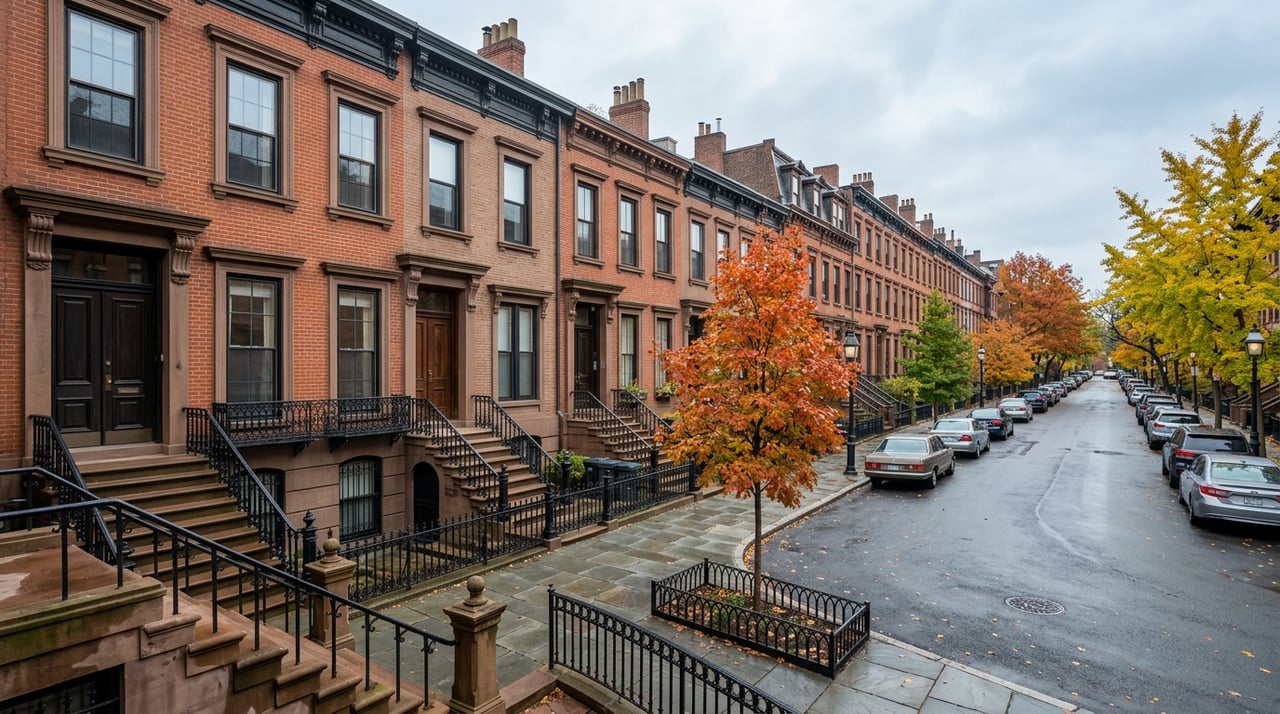
Walk First Avenue between Houston and 14th Street this week and you'll pass at least five restaurants that didn't have their signage up a year ago. Walk two blocks west into Tompkins Square Park on a Saturday afternoon and you might catch a hardcore band playing a tradition that traces back to 1981. Both of those things are true of the East Village in September 2026, and neither one is the exception.
The neighborhood's ground floor is turning over fast on one avenue in particular. Its cultural core, a few hundred feet away, is holding a shape it's held for decades. Understanding both tells you more about how the East Village actually lives right now than either fact does alone.
What's New on First Avenue Since Labor Day
First Avenue has quietly become the strip where the neighborhood's newest kitchens are landing. Herbie's Burgers, a fast-food chain that started upstate in Albany, opened its East Village location at 109 First Avenue, joining what food writers have started calling a cluster of grab-and-go options along this stretch. A few blocks north, the Indian street-food spot Fomo Momo, which had specialized in momos since it opened in late 2024, is closing out. Signage went up this month for its replacement, Masala East Village, which describes its own concept as "Bombay soul. New York spirit," built around the kind of Indian comfort food the block hasn't had in this exact form before.
Then there's Good Time Country Buffet, the most talked-about opening of the month. It landed on First Avenue from the team behind two of the East Village's more decorated restaurants, Kisa and C as in Charlie, and it's a full Southern-style, all-you-can-eat buffet, the kind of format that's rare anywhere in Manhattan and essentially unheard of below 14th Street.
Two more names joined the avenue in September alone: Hushh, a bar and restaurant, and The Astor, which opened its doors September 16. That's five distinct openings on one avenue inside a single month, not counting whatever's still under construction behind papered windows.
A retail broker who worked one of the recent First Avenue leases put it plainly when the deal closed: new tenants here are "joining a large accumulation of Michelin Guide, star and Bib Gourmand restaurants in the immediate East Village area." That density is exactly why a new opening on this stretch means something different than a new opening almost anywhere else in the city. You're not filling a gap. You're getting in line.
The Buffet That Used to Be Something Else
Good Time Country Buffet has a backstory worth knowing, because it says something about how fast a concept can change shape before it ever opens.
In 2025, the hospitality group behind Kisa and C as in Charlie signed a ten-year lease on a First Avenue space between East 10th and 11th Streets, taking over what had been Ferns American restaurant and bar. At the time, the plan reported was a third Korean-American restaurant from founders David Yun and Steve Choi, men who'd already built a reputation blending Southern American and Korean influences across their first two spots.
What actually opened on First Avenue this month wasn't a third Korean-American restaurant. It was a Southern-style, all-you-can-eat country buffet, built by two founders who were born in Korea and raised in Atlanta, and who grew up eating at exactly this kind of buffet in the 1990s. The concept didn't get less personal between the lease signing and the opening. It got more specific. Instead of another iteration of their existing format, they built something that tells a different, more literal piece of their own history.
That's the kind of thing a resident notices and a passerby doesn't. The restaurant's name and format changed entirely in the space of a year, and the reason had nothing to do with the real estate and everything to do with which part of the founders' story they wanted this particular room to tell.
A quick rundown of what's actually new on the avenue this season:
- Herbie's Burgers – 109 First Avenue, upstate mini-chain, grab-and-go burgers and shakes
- Good Time Country Buffet – First Avenue, all-you-can-eat Southern buffet from the Kisa/C as in Charlie team
- Masala East Village – replacing Fomo Momo, Indian comfort food
- Hushh – bar and restaurant, opened this month
- The Astor – restaurant, opened September 16
Two Blocks West, the Park Hasn't Moved
While First Avenue cycles through new tenants every few weeks, Tompkins Square Park is doing something it's done, on and off, since the early 1980s. Free, all-ages hardcore matinees returned to the park on September 12, part of a series called Back to the New York Hardcore Roots that has now staged 75 concerts across the East Village and beyond over the past several years, playing not just Tompkins Square but venues like Niagara and Berlin as well.
The lineage matters here. Niagara, the bar at 112 Avenue A, sits in the former space of A7, a club recognized as a birthplace of New York hardcore between 1981 and 1984, one that hosted early sets by Agnostic Front, Antidote, the Beastie Boys, and Black Flag before it reopened as Niagara in 1997. The matinee format itself goes back to that same era, when all-ages Sunday shows at CBGB and other Lower East Side venues gave teenage fans a way into a scene otherwise locked behind bar doors.
Staging a concert legally in a city park isn't automatic. NYC Parks requires a Special Event Permit for any gathering over 20 people, or any event using amplified sound, temporary stages, or vendors, and annual applications open every September. This year's permitting climate got more complicated after the agency issued an emergency rule in March 2026 that allowed it to deny new special event permits between June 11 and July 19, a window carved out to manage NYPD staffing for FIFA World Cup and U.S. 250th anniversary events, with priority going to returning annual events over new ones. The organizers behind the hardcore matinees evidently secured what they needed anyway, because the September 12 show went on as planned heading into fall.
Tompkins Square Park has never been a neutral backdrop for gatherings like this. The park was the site of a police riot on August 6 and 7, 1988, when officers tried to enforce a new 1 a.m. curfew and ended up in a clash that injured 38 people and generated more than 100 police brutality complaints. The free, permitted matinee happening in the same park today stands in visible contrast to that history, not because the neighborhood forgot it, but because the tradition adapted around it and kept going.
Both Things Are the Same Neighborhood
None of this is really a story about restaurants replacing punk shows, or the reverse. It's a story about a few blocks of Manhattan running two different clocks at once. First Avenue's storefronts turn over on a timeline measured in months. The corner of Avenue A and 7th Street runs on a timeline measured in decades, and the people keeping that second clock running are, in some cases, the same organizers who were doing it in the 1980s.
If you've lived here long enough to remember when Fomo Momo was the new thing on the block, you already know how fast this cycle moves. If you've caught even one of the last 75 hardcore shows this series has staged, you know how slow the other one moves. This fall, both are happening within a five-minute walk of each other.
If you're the kind of person who tracks a neighborhood this closely, whether that's out of habit or because you're weighing what your own place here is actually worth these days, Miller Schackman works this stretch of Manhattan block by block. Get your free home valuation and find out what an East Village apartment on either side of that five-minute walk is worth right now.