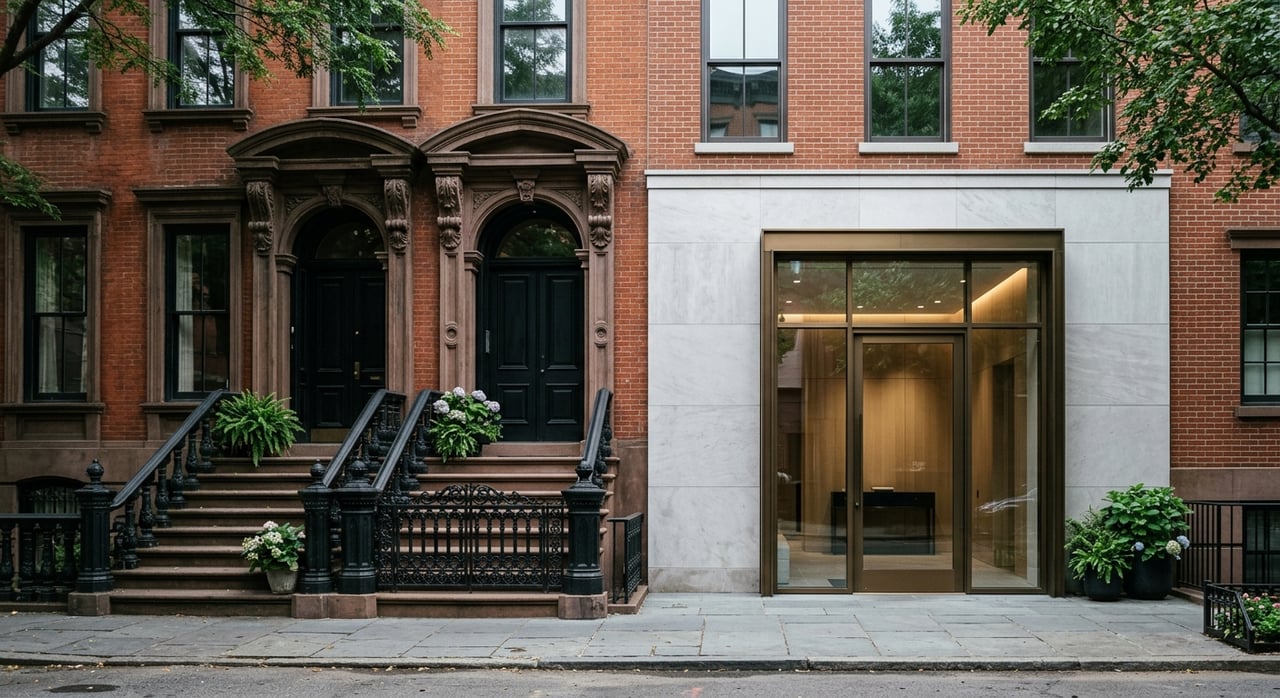
Trying to choose between a townhouse and an apartment in Greenwich Village? You are not alone. In one of Manhattan’s most competitive and expensive neighborhoods, the right fit often comes down to how you want to live day to day, not just what you can buy. If you understand the tradeoffs in price, privacy, upkeep, and monthly costs, you can make a smarter decision with more confidence. Let’s dive in.
Greenwich Village housing looks very different by property type
Greenwich Village has limited housing supply, and that shapes both pricing and competition. Public market snapshots show median sales in the neighborhood around $1.4 million to $1.5 million, with homes often moving in under two months.
But the bigger story is how sharply pricing can change by ownership type. Recent public data shows co-ops around $1.2 million, condos around $3.3 million, and houses around $18 million. That makes the townhouse versus apartment question less about small differences and more about two very different ownership experiences.
If you are comparing options, it helps to think of “apartment” here as either a co-op or condo, not a rental. In Greenwich Village, that distinction matters because ownership structure affects price, financing, monthly costs, and how much control you have over the property.
Apartment vs townhouse: the basic difference
At a high level, this is a choice between shared responsibility and independence. A co-op or condo apartment usually gives you less direct responsibility for the building exterior, while a townhouse typically gives you more control over the property as a whole.
That extra control can be appealing if you want privacy, private outdoor space, or fewer shared common areas. At the same time, more control usually means more direct responsibility for repairs, maintenance, and compliance.
A co-op and a condo are also not the same thing. In a co-op, you buy shares in a corporation and receive the right to occupy your unit through a proprietary lease. In a condo, you own the unit itself and share ownership of common elements with the other unit owners.
Why apartments appeal to many Greenwich Village buyers
For many buyers, apartments offer a more manageable path into Greenwich Village ownership. That is especially true for co-ops, which often sit at the lower end of the local pricing ladder compared with condos and townhouses.
Apartments can also simplify day-to-day ownership. Building systems, common-area upkeep, and exterior repairs are generally handled through the building structure rather than by you directly. Instead of managing the whole property yourself, you usually pay monthly maintenance or common charges.
That setup can feel easier if you want a more predictable ownership routine. You may not have to think as much about sidewalk repairs, snow removal, or exterior maintenance because those responsibilities are usually handled at the building level.
Co-ops usually cost less upfront
In Greenwich Village, co-ops often represent the most attainable ownership option among the three major categories. Public examples support that pattern, including a co-op at 11 Fifth Avenue that sold for just over $1 million.
That lower entry price can be attractive, but you need to look beyond the purchase number. That same co-op had monthly maintenance of $2,222, which shows why your real monthly cost matters as much as the contract price.
Condos offer direct unit ownership
Condos often appeal to buyers who want a more traditional ownership structure. You own the individual unit, while common areas and exterior elements are owned collectively.
In Greenwich Village, condos usually command a higher price than co-ops. Public comps in the neighborhood show a wide range, from about $1.745 million for a condo at 60 West 13th Street to $7.5 million for a penthouse condo at 815 Broadway.
Apartment living means more governance
The tradeoff for lower direct maintenance is more building-level governance. Co-ops and condos operate through boards or associations, with rules, records, and shared financial obligations.
That does not automatically make apartment ownership harder. It simply means your ownership experience is tied to the health and operation of the building. In a condo, for example, owners can face issues related to common charges, building finances, or assessments.
Why a townhouse appeals to a different buyer
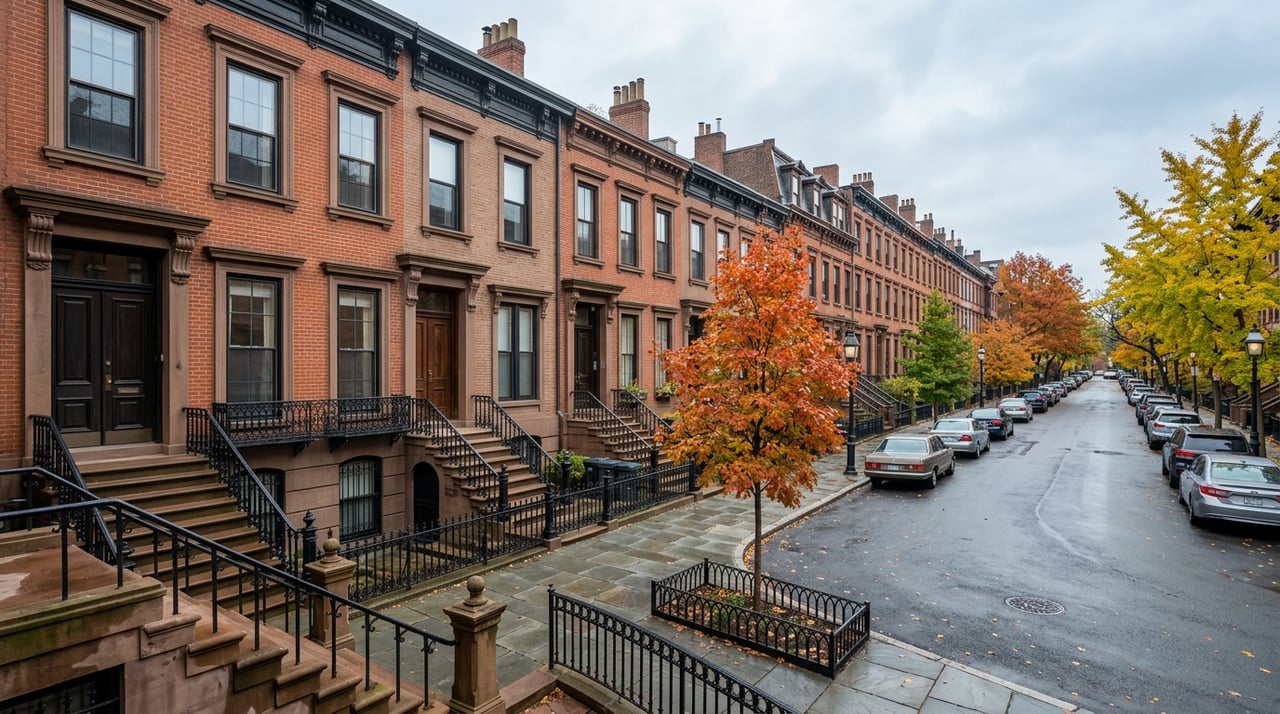
A townhouse offers a very different lifestyle. In Greenwich Village, it often means more privacy, fewer shared spaces, and greater control over how the property is used and maintained.
For some buyers, that independence is the whole point. You are not relying on hallways, elevators, shared roof decks, or building-level decisions in the same way you would in an apartment building.
Outdoor space can also be a major advantage. A recent Greenwich Village townhouse sale at 3 East 9th Street included private outdoor space with a garden and terrace, which highlights something many apartment buyers cannot easily get.
Townhouses usually come with more upkeep
The freedom of townhouse ownership comes with more direct responsibility. In New York City, homeowners are generally responsible for exterior upkeep, protecting pipes from freezing, snow and ice removal, and sidewalk repair and maintenance.
That means you are not just buying interior living space. You are also taking on the practical work and expense tied to the building itself and the area adjoining it.
This is one reason townhouse ownership can feel more hands-on. If something needs attention, there is less of a building structure between the issue and your wallet.
Landmark rules can matter in Greenwich Village
Parts of Greenwich Village fall within a historic district, and that can affect exterior work on townhouses. The Greenwich Village Historic District was designated in 1969, and protected properties may require preservation review for changes to items like façades, windows, and stoops.
If you love historic architecture, this may be part of the appeal. But it is also a practical factor because exterior changes may involve more approvals than you would expect.
The real cost comparison is monthly, not just purchase price
Buyers often focus on the headline number first, but monthly carrying costs can tell a very different story. A lower-priced apartment may still carry sizable monthly maintenance or common charges, while a townhouse may have no common charges but far higher direct taxes and upkeep.
Public Greenwich Village comps illustrate this clearly. One co-op sale included $2,222 per month in maintenance. A condo example included $1,143 per month in common charges. The townhouse at 3 East 9th Street had no common charges, but it carried monthly taxes of $7,912.
Here is the simplest way to think about it:
| Property type | Typical cost structure |
|---|---|
| Co-op apartment | Purchase price plus monthly maintenance |
| Condo apartment | Purchase price plus monthly common charges and taxes |
| Townhouse | Purchase price plus direct property taxes, insurance, and upkeep |
There can also be tax relief for eligible primary-residence co-op and condo units through New York City’s co-op and condo property tax abatement. But that benefit depends on eligibility, and the building’s management or board must apply for the development.
Financing can be easier or harder depending on the property
Not every purchase path works the same way in Greenwich Village. Financing for co-ops is more specialized than financing for condos, and that can affect your timeline and options.
For a co-op, the loan is tied to your ownership interest in the corporation and your right to occupy the unit. Lenders also look at project-level factors such as reserves, cash flow, and delinquency levels. That means approval is about both you and the building.
Condo financing is often more conventional, but lenders still review the project. They may look at the physical condition, finances, debt, litigation, and required inspections depending on the building and transaction.
Townhouse financing is a different conversation again, especially because pricing in Greenwich Village can sit far above many apartment purchases. If you are comparing these property types, your financing strategy should be part of the decision early, not something you sort out later.
How to decide what fits your lifestyle
The best choice usually comes down to how you want your home to function. In Greenwich Village, the townhouse versus apartment decision is rarely just about square footage.
An apartment may fit you best if you want:
- A lower entry point than a townhouse
- Less direct responsibility for exterior maintenance
- A building-centered ownership structure
- A simpler day-to-day ownership routine
A townhouse may fit you best if you want:
- More privacy
- More control over the full property
- Better odds of private outdoor space
- Less dependence on shared common areas
You should also think honestly about your tolerance for upkeep and governance. Some buyers would rather manage building rules and monthly charges. Others would rather take on direct maintenance in exchange for more independence.
In Greenwich Village, the right fit is personal
There is no universal winner between a townhouse and an apartment in Greenwich Village. The market clearly shows that townhouses, condos, and co-ops occupy very different price bands, but the better choice depends on how you weigh privacy, cost structure, financing, and maintenance.
If you want a home that feels more independent and private, a townhouse may be worth the added responsibility and cost. If you want a more accessible ownership path with less direct exterior upkeep, a co-op or condo apartment may be the stronger fit.
The smartest move is to compare options with real neighborhood context, clear monthly cost math, and a close look at the ownership structure behind each property. If you are weighing a Greenwich Village apartment against a townhouse, Miller Schackman can help you compare the tradeoffs and move forward with confidence.
FAQs
What is the difference between a co-op apartment and a condo apartment in Greenwich Village?
- In a co-op, you buy shares in a corporation and receive occupancy rights through a proprietary lease, while in a condo, you directly own the unit and share ownership of common elements.
Are Greenwich Village townhouses more expensive than apartments?
- Yes. Public market data shows a large pricing gap, with co-ops around $1.2 million, condos around $3.3 million, and houses around $18 million in recent snapshots.
Do Greenwich Village townhouses have more maintenance responsibility?
- Yes. Townhouse owners are generally responsible for exterior upkeep, sidewalk maintenance, and snow and ice removal, along with other direct property care.
Do Greenwich Village apartments always include outdoor space?
- No. Outdoor features like roof decks, terraces, or other ancillary spaces depend on the specific property or offering plan and are not automatic.
Is financing different for co-ops and condos in Greenwich Village?
- Yes. Co-op financing is more specialized and includes project-level eligibility review, while condo financing is more conventional but still depends on the building’s condition and finances.
Do landmark rules affect Greenwich Village townhouse buyers?
- They can. In landmarked parts of Greenwich Village, exterior changes to protected properties may require preservation review.